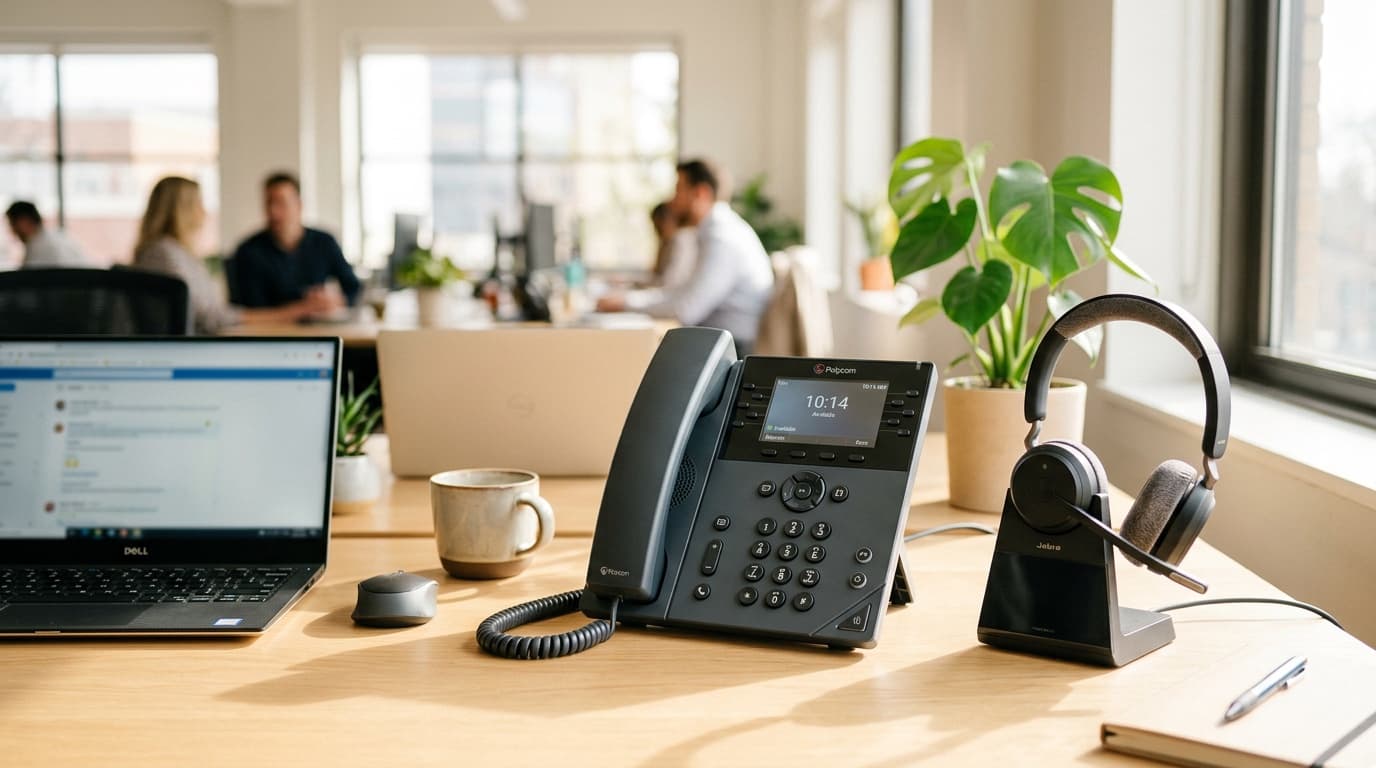
Phone and text scams now drive more than a quarter of UK fraud losses. The fix is a habit, not a gadget.
The latest UK Finance figures put telecoms behind 17% of fraud cases but 28% of the money lost. The costly ones start with a convincing call or message.
UK Finance, the trade body for the banking industry, puts the amount stolen by fraudsters in 2025 at close to £1.3 billion across more than four million cases, up 11% in a year. Sitting inside that total is a figure that matters if your business runs on phones: telecoms was the starting point for 17% of fraud cases, but those cases accounted for 28% of all the money lost. Put plainly, the scams that begin with a call or a text are among the most expensive ones going.
Why the phone ones cost more
A scam email is easy to bin. A phone call is harder, because a real voice, a bit of urgency and some homework can push a person into acting before they think. These are impersonation scams: someone posing as your bank, your IT provider, a supplier or the taxman, with the aim of getting a member of staff to move money, approve a payment or hand over a login. Authorised push payment fraud, where a victim is talked into sending the money themselves, ran to £576.4 million across roughly 248,000 cases last year.
AI is making the calls more convincing
UK Finance notes that criminals are increasingly using AI to sharpen their scams, from cleaner scripts to cloned voices. The effort it takes to sound like your finance director, or your bank, is dropping, which is the same shift we have flagged before. It does not call for panic, but it does mean the 'it sounded real' defence is worth less than it used to be.
What actually stops it
Technology helps, but the defence that holds up is a business habit that does not rely on spotting the fake. Two rules cover most of it. First, any change to bank or payment details, and any unusual or urgent payment, gets checked on a number you already hold for that contact, never a number or link the caller gives you. Second, more than one person signs it off. Add some staff training so people know these calls are aimed at them, and that pausing to verify is the right move rather than a slight on the caller.
What this means for your business
The scams that cost the most now come down the phone line, and no single gadget blocks them. We help on both sides of that. On the phone system, we set up business telephony with the call handling and controls that make spoofing and misuse harder, and on the people side we run security awareness training so your team treats an unexpected 'urgent payment' call the way it deserves. If you want a straight look at where your business is exposed to this, that is a conversation worth having.
#WEARECOBALT
Ready when you are.
Tell us what's slowing your business down. We'll tell you exactly how we'd fix it — plainly, with no obligation.